
Foodborne Parasites: Not Just a Travel Risk!

Updated: Feb 12
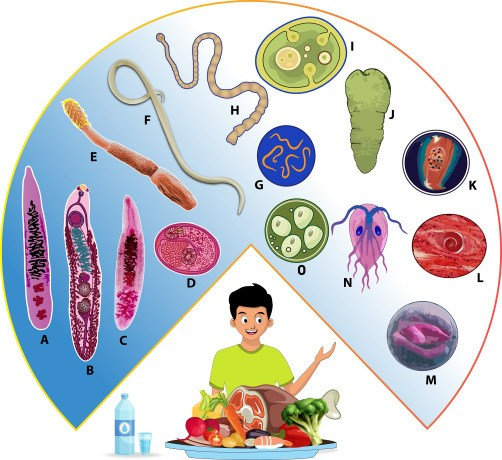
Parasites in Your Food 🍽️🐛
Foodborne parasites aren’t just a travel problem—they can be hiding in everyday meals right in your kitchen. From raw fish to leafy greens, common foods can expose you to organisms that cause digestive distress, allergic reactions, and long-term nutrient loss. Here’s what to know and what to do.
Raw Fish Risks 🍣
Sushi, sashimi, and other raw fish dishes can carry parasites like Anisakis, a nematode that may cause sharp abdominal pain, nausea, vomiting, and allergic reactions. A 2020 study in Parasites & Vectors found that nearly 30% of tested sushi restaurants had detectable traces of Anisakis, underscoring that exposure is not uncommon.
Produce & Leafy Greens 🥬
Leafy greens, herbs, and other produce can become contaminated with parasite eggs through soil, irrigation water, animal waste, or poor handling. Even washed-looking produce needs careful cleaning—especially when sourced from high-risk areas or small-scale growers using untreated compost.
Health Effects to Watch For 🩺
Symptoms vary by parasite and exposure level, but common signs include:
abdominal pain, bloating, cramps
diarrhea or constipation
unexplained fatigue or weight loss
allergic reactions or skin rashes
long-term nutrient deficiencies or anemia in chronic cases
Because symptoms are often vague, foodborne parasites can go unrecognized and untreated for a long time.
How to Protect Yourself 🧼🥒
Wash produce thoroughly—use running water and, when needed, a produce brush.
Avoid cross-contamination: separate cutting boards and utensils for raw fish/produce and cooked foods.
Consider detox strategies if you’re in a high-exposure region or experiencing symptoms.
Seek testing if symptoms persist or you suspect foodborne infection.
Final thought
Awareness, careful sourcing, and smart kitchen hygiene dramatically reduce your risk. Food doesn’t have to be scary—but respecting the hidden risks helps you protect digestion, energy, and long-term health.



Comments