
Usnea (Old Man's Beard): Medicinal Uses, Antimicrobial Properties & Research

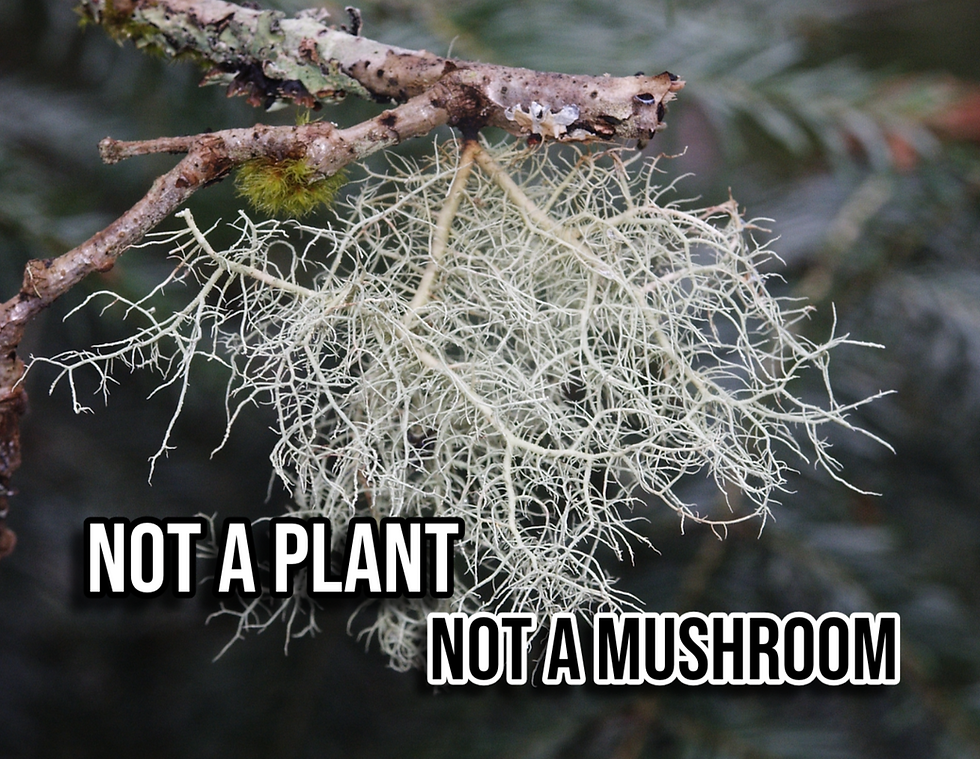
When people think of medicinal herbs, they usually picture leaves, flowers, or roots.
But one of the most intriguing antimicrobial organisms in herbal medicine isn't actually a plant.
It's a lichen.
What Is Usnea?
Usnea, commonly known as Old Man's Beard, is a lichen—a unique symbiotic organism formed by a fungus living together with either a green alga or a cyanobacterium.
Rather than competing, these organisms work together, creating a highly resilient life form capable of surviving in some of the world's harshest environments.
To do that, Usnea has evolved an impressive arsenal of defensive compounds.
Why Are Scientists Interested in Usnea?
Much of the scientific interest surrounding Usnea centers on usnic acid, one of its primary secondary metabolites.
Laboratory studies have demonstrated antimicrobial activity against a variety of microorganisms, including:
Several fungal species
Gram-positive bacteria
Certain biofilm-forming microorganisms
Researchers believe one of its mechanisms of action involves disrupting microbial energy production and interfering with cell membrane function, making it more difficult for microorganisms to survive.
Because of these findings, Usnea continues to be investigated for its potential role in natural antimicrobial research.
Beyond Antimicrobial Activity
Usnea has attracted scientific attention for more than just its effects on microbes.
Experimental studies have also reported:
Antioxidant activity
Anti-inflammatory properties
Additional pharmacological potential that continues to be explored
Although these findings are promising, much of the evidence remains preclinical, and researchers continue to investigate how these mechanisms may translate into human health applications.
Usnea as a Bioindicator
One of the lesser-known facts about Usnea has nothing to do with herbal medicine.
Because lichens absorb water and nutrients directly from the atmosphere rather than through roots, they are exceptionally sensitive to environmental pollution.
For decades, scientists have used various Usnea species as bioindicators to monitor:
Airborne heavy metals
Atmospheric pollutants
Overall air quality
A tiny lichen growing on a tree can provide valuable information about the environment surrounding it.
Important Considerations
Most of the published research investigating the antimicrobial properties of Usnea has been conducted in vitro (laboratory studies) or in animal models.
Human clinical research remains limited.
In addition, whole-herb preparations differ from isolated compounds such as purified usnic acid. As with any medicinal herb, Usnea deserves informed and respectful use, particularly since concentrated forms have raised safety concerns in some contexts.
Final Thoughts
Usnea is a remarkable example of the sophisticated chemistry found in nature.
Part fungus, part alga, and equipped with an array of defensive compounds, this humble lichen continues to capture the attention of researchers studying antimicrobial activity, fungal biology, biofilms, oxidative stress, and environmental monitoring.
Sometimes the most fascinating organisms are the ones growing quietly on the branches above our heads.


Comments