
Mold Exposure vs. Mycotoxin Exposure: What’s the Difference?


Mold Exposure Isn’t the Same Thing as Mycotoxin Exposure
When we talk about mold in a building, we're not talking about one single substance.
Mold is a type of fungus. When it grows indoors, it can release or contribute to exposure to several different things, including spores, fungal fragments, allergens, cell-wall components, and microbial compounds.
What Are Mold Spores?
Spores are microscopic reproductive structures that molds release into the air. They can remain airborne or settle into household dust. When they land on a sufficiently wet surface, they can germinate and form new colonies.
What Are Fungal Fragments?
Fungal fragments are pieces of the mold itself. These can also become airborne, particularly when contaminated materials are disturbed.
Molds can also produce allergens and irritants, which is one reason exposure to damp and moldy environments is associated with respiratory symptoms, allergic reactions, asthma exacerbation, and irritation of the eyes, nose, throat, skin, and lungs.
And then there are mycotoxins.
What Are Mycotoxins?
Mycotoxins are toxic secondary metabolites produced by certain fungi. They are chemical compounds, not spores and not pieces of mold.
So where are they found?
Mycotoxins in Food
One major source is food.
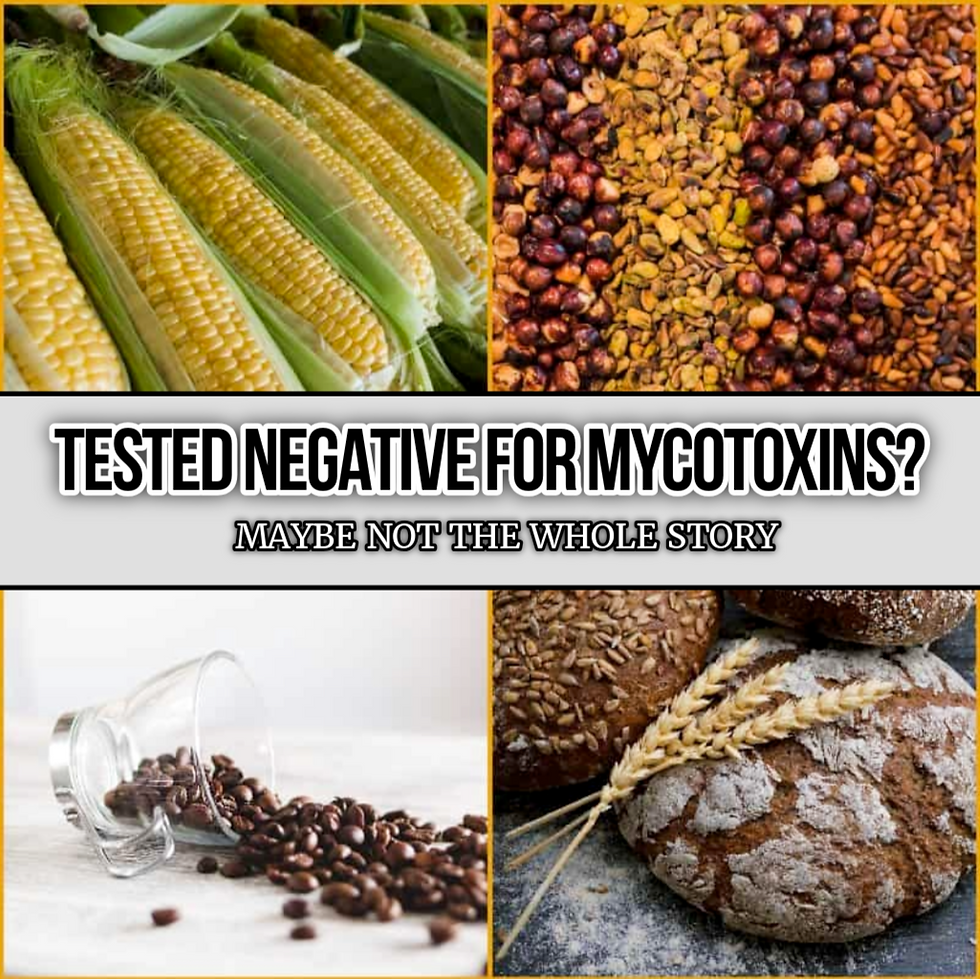
Mycotoxins can contaminate agricultural commodities when certain fungi grow on crops, either before harvest or during storage. Depending on the toxin, foods can include grains, corn, peanuts and other nuts, dried fruits, spices, coffee, and other agricultural products.
Some examples include:
Aflatoxins → produced by certain Aspergillus species and commonly associated with peanuts, tree nuts, corn, and other crops.
Ochratoxin A → produced by certain Aspergillus and Penicillium species and detected in foods including cereals, coffee, dried fruits, and spices.
Fumonisins → produced primarily by Fusarium species and strongly associated with maize/corn.
Trichothecenes → produced by several fungi, including Fusarium species, and can contaminate grains.
Zearalenone → produced by certain Fusarium species and commonly associated with cereals.
Mycotoxins in Indoor Environments
Mycotoxins can also be present in mold-contaminated materials and indoor environments under certain conditions, which is why they come up in discussions about water-damaged buildings.
However, finding mold indoors does not automatically prove that a person is being exposed to harmful concentrations of mycotoxins.
That's an important distinction.
A moldy building can involve exposure to fungal spores, fragments, allergens, cell-wall components, volatile organic compounds (VOCs), and potentially mycotoxins. These exposures are not interchangeable.
Why the Route of Exposure Matters
The route through which a substance enters the body matters when evaluating exposure.
Eating a mycotoxin-contaminated food is not the same exposure scenario as inhaling particles in a water-damaged building.
The dose, duration, route of exposure, chemical involved, and environmental conditions all matter when considering potential health effects.
This is why using the terms “mold exposure” and “mycotoxin exposure” as though they mean exactly the same thing can create confusion.
Mold exposure can involve many different biological particles and compounds. Mycotoxins are a specific category of chemical compounds produced by certain fungi.
Understanding that distinction is important when looking at mold and environmental exposure from a scientific perspective.


Comments