
Why Mold Toxins Can Linger in the Body
- Bianka Rainbow

- Feb 20
- 2 min read

Understanding How Mold Toxins Stay in the Body
There’s a biological reason why some people continue to feel the effects of toxic mold exposure even after the source is gone — it comes down to how the body handles different chemical compounds.
1. Some Toxins Are Fat‑Soluble
Certain mycotoxins (the toxic chemicals produced by mold) are lipophilic, meaning they dissolve more easily in fat than in water.
Water-soluble toxins are usually filtered out quickly through urine or bile.
Fat-soluble toxins can enter and reside in adipose (fat) tissue, which the body doesn’t turn over as quickly.
This isn’t unique to mold — other environmental toxins, like some pesticides and industrial chemicals, behave similarly.
2. Stored Toxins Can Be Released Slowly
When a toxin is stored in fat, it may be released back into circulation slowly over time, especially when:
Calorie intake changes
Body fat is mobilized (during fasting or weight loss)
Inflammation is present
This slow release doesn’t mean the toxin stays indefinitely — it means the body may continue to encounter it even after the external mold source is removed.
3. Research Perspective
Toxicology studies show that lipophilic compounds can have longer biological half-lives because:
They partition into fat tissue
They avoid rapid kidney elimination
They aren’t easily broken down until the fat they’re in is metabolized
Different mycotoxins have different chemical structures, and not all are equally lipophilic. However, several well-studied toxins, like certain aflatoxins and ochratoxin A, do show this behavior in animal and human studies.
Important nuance: How much is stored and the effects depend on the specific toxin, dose, metabolism, and individual health factors.
4. What This Means in Real Life
If someone has had chronic mold exposure:
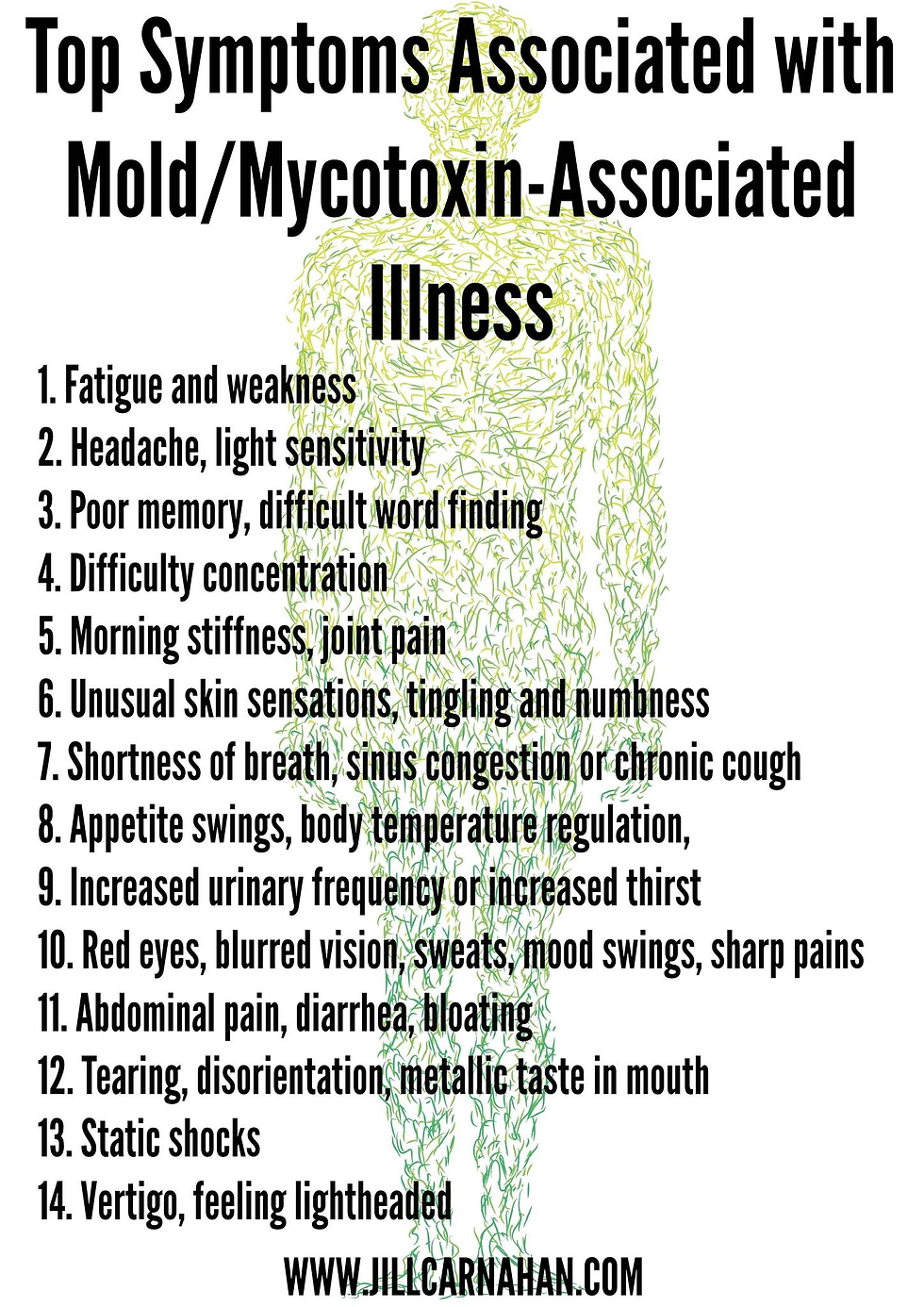
Symptoms may persist even after remediation
Inflammation or immune activation can continue
Toxins stored in tissues (including fat) may take time to clear
This isn’t “your body being stuck” — it’s a matter of how certain chemicals travel and are stored in the body.
5. Not a Diagnosis, Just a Biological Explanation
This doesn’t mean everyone exposed to mold will store toxins in fat or that this explains all symptoms.But it helps explain why some people experience prolonged effects even after the mold source is removed.


Comments