
Hidden Mold Exposure: Mycotoxins in Food

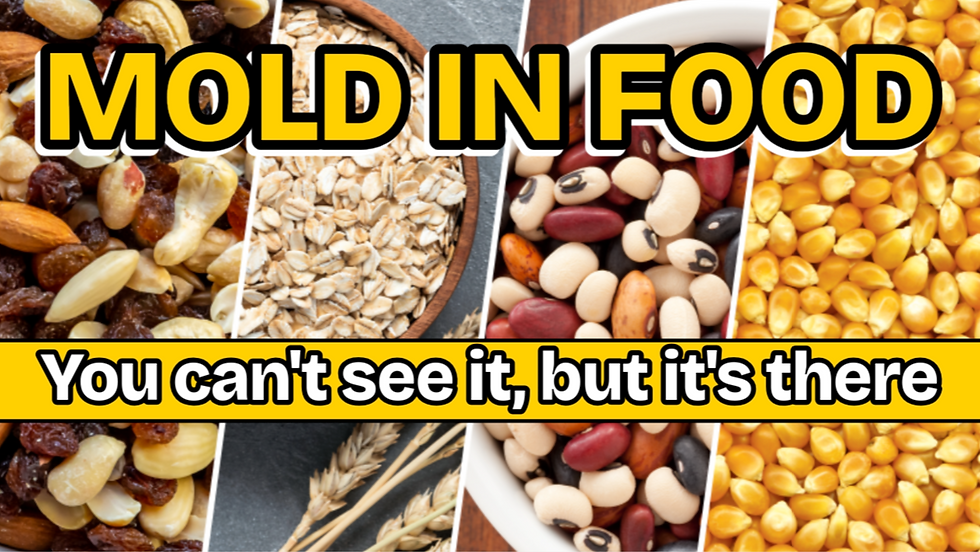
When most people hear the word mold, they immediately think about mold growing in buildings or water-damaged homes. However, there is another potential source of exposure that often gets overlooked: food.
Certain molds can naturally grow on crops during the growing process, harvest, storage, or transportation. Some of these molds produce compounds known as mycotoxins, which are toxic substances that may remain present in food even when the mold itself is no longer visible.
Scientists have been studying mycotoxins for decades because they are commonly found in parts of the global food supply. Some of the most researched mycotoxins include aflatoxins, ochratoxin A, fumonisins, and zearalenone. These toxins are produced by different species of mold that can grow on agricultural products under specific temperature and humidity conditions.
Foods That May Contain Mycotoxins
Research has shown that certain foods can sometimes contain measurable levels of mycotoxins, including:
• Grains such as corn, wheat, and barley • Coffee beans • Peanuts and certain tree nuts • Dried fruits • Spices • Cocoa and chocolate products
Food safety agencies around the world monitor these substances and establish maximum allowable limits in order to protect public health. However, researchers continue to investigate the potential effects of long-term, low-level exposure, particularly when combined with other environmental factors.
The Role of Cumulative Exposure
Another concept researchers examine is cumulative exposure. Small amounts of toxins from different foods may add up over time, contributing to an individual’s total exposure level.
A person’s exposure may vary depending on factors such as:
• Dietary habits • Food storage conditions • Geographic location • Environmental exposures
Because of this, scientists are increasingly studying how dietary mycotoxins might interact with other environmental stressors.
Mycotoxins and Environmental Health
Environmental health researchers are exploring whether food-based mycotoxin exposure could interact with other factors such as:
• Water-damaged buildings • Indoor mold exposure • Gut health and microbiome balance • Overall toxic load in the body
Although the levels found in food are generally considered low and within regulatory safety limits, the long-term effects of cumulative exposure are still an active area of scientific research.
The Takeaway
Mold exposure is not always obvious or visible. While indoor environments such as water-damaged buildings receive most of the attention, diet can also contribute to overall exposure.
For this reason, researchers continue studying the relationship between food safety, mycotoxins, and long-term health, helping us better understand how different environmental factors may interact within the body.


Comments