
H. pylori Explained: How This Bacteria Affects Digestion, Inflammation, and Gut Balance

Updated: Feb 12
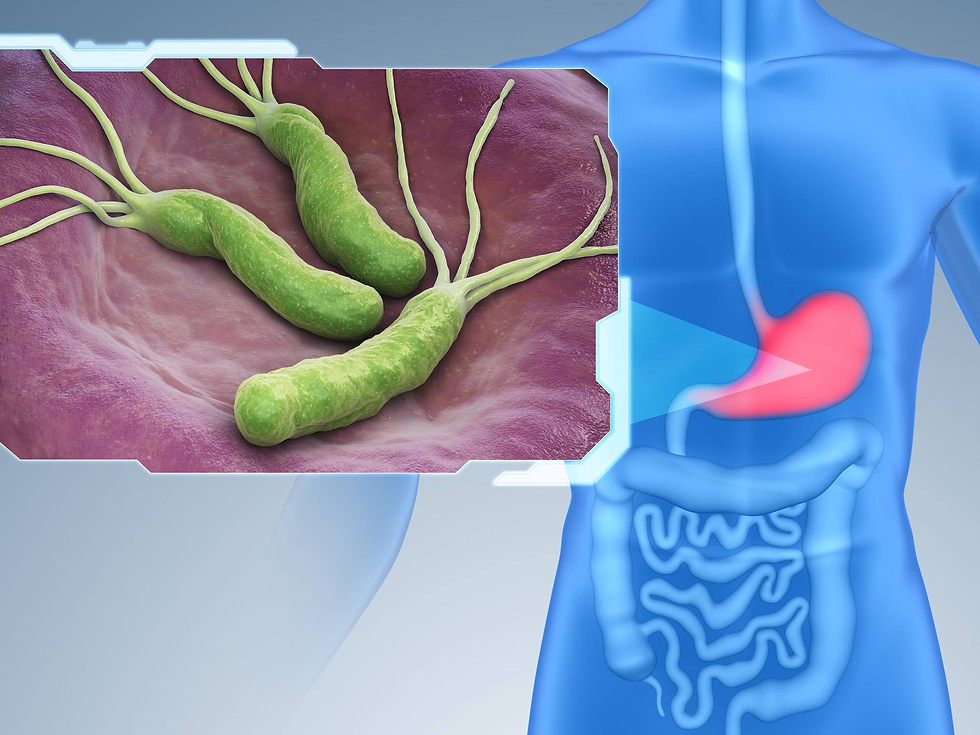
Helicobacter pylori (H. pylori): What It Is, How It Affects Digestion, and Why Gut Balance Matters
Understanding a Common but Often Overlooked Digestive Bacteria
Helicobacter pylori (H. pylori) is a spiral-shaped, gram-negative bacterium that commonly inhabits the stomach and upper small intestine. It is one of the most well-studied bacteria in digestive health due to its association with chronic inflammation of the stomach lining and its potential role in ulcer development.
While many people carry H. pylori without obvious symptoms, imbalances involving this organism can significantly impact digestion, nutrient absorption, and overall gut health.
Key Characteristics of H. pylori
H. pylori has several unique features that allow it to survive in the harsh environment of the stomach:
It lives within the mucosal layer of the stomach and duodenum
It produces urease, an enzyme that breaks down urea into ammonia, helping neutralize stomach acid
This process can contribute to symptoms such as belching and bad breath
It reduces protective mucus secretion, which may irritate the stomach lining
It produces cytotoxins that can damage stomach tissue over time
Because it is gram-negative, H. pylori has a double cell wall, making it more resistant to many antibiotics. It also contains efflux pumps that actively push substances out of the cell, contributing to antibiotic resistance.
Inflammation and Endotoxins
Like other gram-negative bacteria, H. pylori contains lipopolysaccharides (LPS) in its outer membrane. LPS is a potent endotoxin that can trigger inflammatory responses when present in excess.
This inflammatory signaling may influence:
Stomach and intestinal irritation
Immune activation
Gut-brain communication
Common Symptoms Associated With Imbalance
Symptoms can vary widely depending on bacterial load, host health, and gut resilience. They may include:
Bloating or nausea
Abdominal discomfort or pain
Acid imbalance
Fatigue or anemia in more advanced cases
In severe presentations, complications may include ulcers or gastrointestinal bleeding, which require medical evaluation.
Transmission and Testing
H. pylori is commonly transmitted through:
Saliva
Contaminated food or water
Contact with vomit or fecal matter
Diagnosis is typically performed using:
Breath testing
Stool testing
Blood antibody testing
Why the Microbiome and Gut-Brain Axis Matter
Digestive health is not isolated to the stomach. The gut-brain axis plays a key role in:
Digestive signaling
Nutrient absorption
Neurotransmitter production
Mood and stress regulation
Supporting microbial balance, detoxification pathways, and gut lining integrity is often emphasized in functional approaches to digestive wellness.
A Supportive, System-Wide Approach
Rather than targeting a single organism, many practitioners focus on restoring balance across the gut ecosystem.
Commonly used supports include:
Clean Slate – Studied for its ability to reduce biogenic amines and ammonia associated with gram-negative bacterial activity
Restore – Supports digestion, inflammation balance, and gut lining integrity
Zero In – Supports gut-brain communication and neurotransmitter balance
ReLive Greens – Provides concentrated greens, prebiotics, probiotics, fiber, and inulin to support digestion and immune function
These products are commonly found together in the Dr. Rahm Pack.
Important Note
This content is educational only and not intended to diagnose, treat, or cure disease. Always consult a qualified healthcare professional before making changes to your health routine.


Comments