
Dark Chocolate & Heavy Metals: The Hidden Truth Behind Your “Healthy” Treat

The Truth About Dark Chocolate (That No One Talks About)
For years, dark chocolate has been marketed as a healthy way to satisfy your sweet tooth… rich in antioxidants, minerals, and even mood-boosting compounds.
But there’s a darker side to this “superfood” that most people aren’t aware of.
Recent testing revealed something concerning — and it’s not just in one brand… it’s widespread.
🧪 What Testing Found in Popular Chocolate Brands
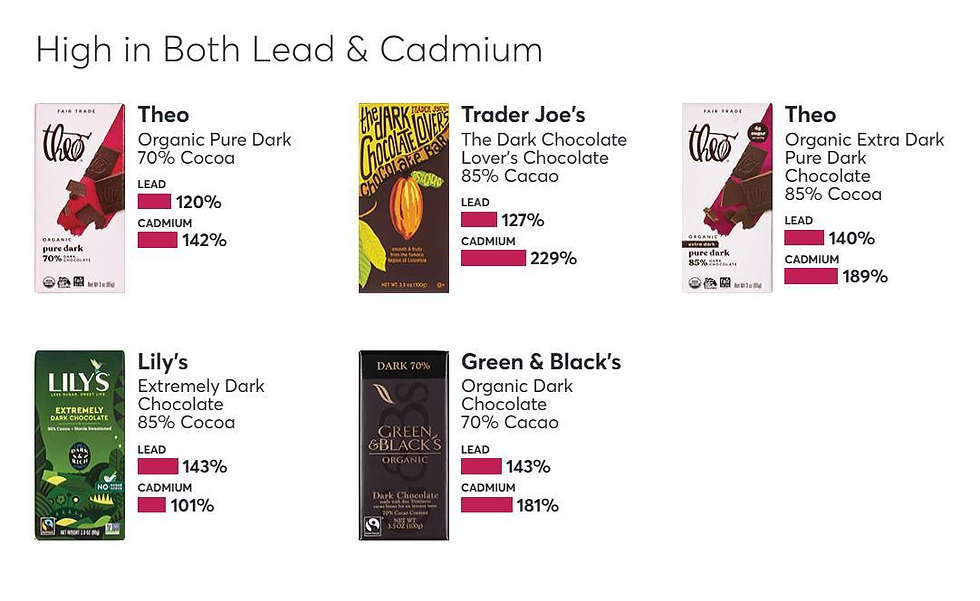
Consumer testing analyzed 28 chocolate bars from well-known brands like Hershey’s, Trader Joe’s, Theo, Dove, Ghirardelli, Alter Eco, and Mast.
The result?
👉 Every single bar contained detectable levels of heavy metals — specifically:
Cadmium
Lead
These are not harmless trace elements… they are toxic metals linked to long-term health effects in both adults and children.
Even more concerning:
👉 23 out of the 28 bars tested exceeded levels considered potentially harmful when consuming just 1 ounce per day.
⚠️ Why Cadmium Exposure Matters
Cadmium is a heavy metal that accumulates in the body over time.
Epidemiological research has linked cadmium exposure to several types of cancer, including:
Breast cancer
Lung cancer
Prostate cancer
Nasopharyngeal cancer
Pancreatic cancer
Kidney cancer
This isn’t about occasional exposure — it’s about daily accumulation from foods people think are safe.
⚠️ The Effects of Lead on the Body
Lead is another well-known toxin that affects multiple systems in the body.
Exposure has been associated with:
Fatigue
Irritability
Abdominal discomfort
Constipation
Weight loss
Cognitive challenges
Depression
Decreased libido
…and many more neurological and systemic effects.
🌱 How Heavy Metals End Up in Chocolate
This part is important — because it explains why this is happening across brands.
Cadmium:
Naturally present in soil
Absorbed by cacao plants as they grow
Accumulates in cacao beans over time
Lead:
Not typically present inside the bean initially
Contamination happens after harvest
Beans are dried outdoors, where:
Dust
Soil
Environmental pollution
can settle onto them
👉 This means contamination isn’t just about one company — it’s tied to environmental exposure and processing methods.
🍫 Should You Stop Eating Chocolate?
Not necessarily — but awareness matters.
This isn’t about fear… it’s about informed choices and reducing cumulative exposure.
If you’ve consumed chocolate in the past:
👉 You’re not “damaged” — the body is designed to detox when supported properly.
🌿 Reducing Your Exposure Moving Forward
Here are simple ways to be more mindful:
Rotate brands instead of consuming the same one daily
Avoid excessive daily intake
Look for brands that test for heavy metals
Stay informed as more data becomes available
✨ Final Thoughts
Dark chocolate isn’t automatically “bad” — but it’s also not as clean as it’s often marketed.
The real issue isn’t one chocolate bar… it’s the daily accumulation of toxins from multiple sources over time.
Awareness is power — and small changes can make a big difference in your overall toxic load.


Comments